
We continue to carry out energy consumption and carbon emissions reduction programs across key value chain, including manufacturing, packaging, and logistics.
At the manufacturing stage, we reduce energy consumption and carbon emissions in the production process through energy-efficient equipment retrofits and process upgrading and optimization. In 2025, we implemented a series of energy recovery initiatives, including low-pressure air compressor waste heat recovery, steam condensate recovery combined with RO water heat exchange, high-pressure air recovery for low-pressure reuse, and flash steam recovery systems, all of which effectively enhanced the efficiency of heat energy (steam) utilization and reduced steam consumption. Zhe Peng Plant's optimization project for the stretch wrapper machines achieved an annual electricity saving of 252,000 kWh; Hui Peng Plant installed additional insulation on the UHT sterilization pipeline, reducing thermal energy loss and saving 3,619.04 tons of steam annually; Xiang Peng Plant completed a retrofit of the sterile water system, saving 26,831 cubic meters of natural gas annually.
In the packaging phase, we adopt a core strategy of lightweighting packaging materials. By reducing the amount of packaging materials used and increasing the loading efficiency during product transportation, we aim to lower transportation loads, reduce the generation of packaging waste, and minimize the environmental impact of packaging materials. In 2025, the Company continued to advance carbon reduction management for packaging raw materials, with a focus on PET bottle lightweighting and low-carbon process optimization projects. By reducing the amount of PET used per bottle, the Company lowers consumption of packaging raw materials and carbon emissions from upstream packaging raw material production. The Company has adopted lightweight PET bottles in products including the Eastroc Super Drink Small Gold Bottle, the 555ml Eastroc Water Boost, and the 1L Eastroc Water Boost. The procurement volume of lightweight PET packaging materials included in this project was 178,071 tonnes, accounting for 36.21% of the Company's total procurement volume of packaging raw materials.
During the logistics and transportation phase, we reduce unnecessary mileage by optimizing distribution routes and accurately scheduling vehicle dispatching, thereby reducing fuel consumption and carbon emissions during transportation. In the loading process, we use purely electric forklifts to replace traditional fuel forklifts, implement the transportation mode with boards, and prioritize the whole truck transportation scheme, which significantly improves the loading efficiency and reduces the loss of cargo transshipment. Additionally, our capless packaging design and adoption of 4-/6-pack bundling decrease packaging void space, increasing single-truck load capacity and further lowering transportation-related carbon emissions.
Note: Eastroc Beverage does not own or operate any self-owned stores. Our business terminals are supermarkets, convenience stores, and other third-party independently operated outlets. Therefore, the boundary of our greenhouse gas inventory (Scope 1 and Scope 2) and energy reduction projects covers the Group headquarters, all self-owned production bases (100%), self-owned warehousing and logistics facilities, and offices, but excludes any store operations.
Product Carbon Footprint Certification: In accordance with the verification criteria of ISO 14067:2018 and ISO 14064-3:2019, we conducted a cradle-to-gate carbon footprint assessment for Eastroc Vitamin Energy Drink. The accounting boundary covers carbon emissions generated from material acquisition and transportation as well as the production stage.
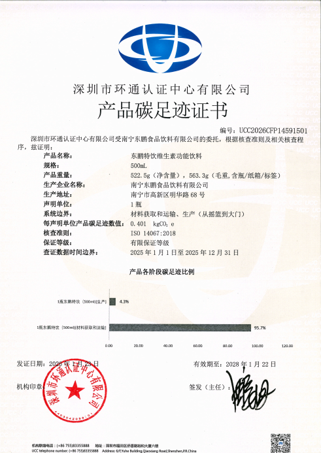
Figure: Product Carbon Footprint Certification for Eastroc Vitamin Energy Drink
Assessment of Suppliers' Carbon Emissions Management: Eastroc Beverage extends carbon management upstream across the value chain. This year, we formally established a carbon data collection mechanism for core suppliers. For core direct suppliers accounting for more than 80% of the Company's procurement value, covering major packaging materials and bulk raw materials, we have required them to regularly report and submit annual energy consumption and greenhouse gas emissions data (Scope 1 and Scope 2), so that we can accurately track and assess the climate performance of the supply chain.